Our Metal Finishing Process
Every great finish starts with proper preparation. See how we transform raw parts into corrosion-resistant, beautiful components.
Surface Preparation
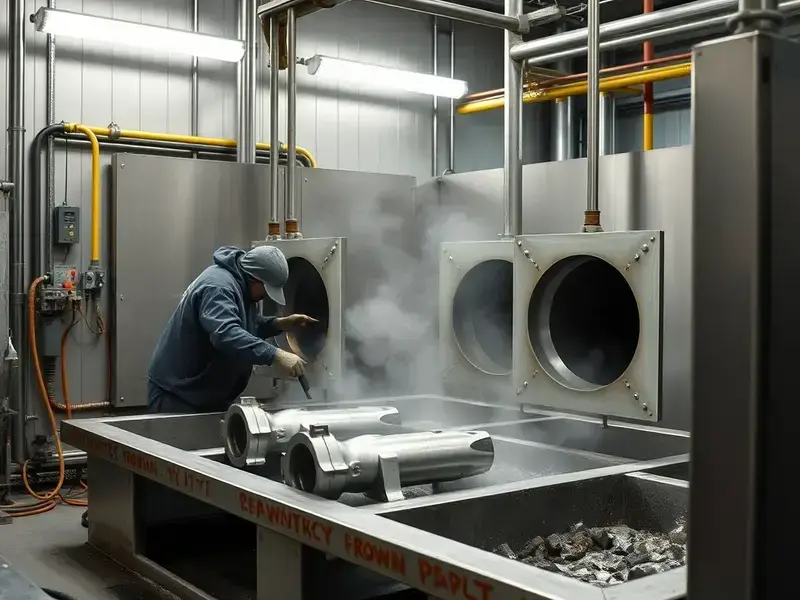
This is where the difference between good plating and great plating is made. Every part that enters our facility goes through rigorous cleaning and surface preparation before any coating is applied.
We start by removing any old plating, paint, rust or corrosion through chemical stripping, abrasive blasting or mechanical grinding — whichever method is appropriate for the part and the desired finish. This is followed by a multi-stage cleaning process using alkaline cleaners, acid pickles and activation steps to ensure the base metal is perfectly clean and receptive to the plating.
Any remaining defects in the base metal — pits, scratches, porosity — will show through the final finish. That's why proper surface prep isn't just about cleanliness, it's about creating the foundation for a flawless final product.
The Plating Process
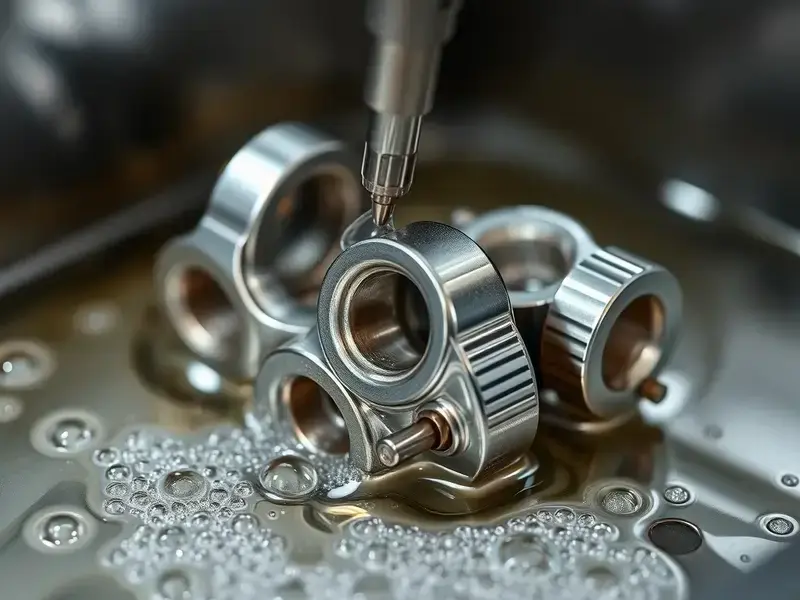
Once the part is properly prepared, it's ready for plating. For electrolytic processes like zinc, nickel and chrome, the part is immersed in the appropriate plating solution while an electric current is applied. Metal ions from the solution are attracted to the part and deposit as a thin, uniform coating.
For decorative chrome, this is actually a multi-layer system. A copper strike is applied first to improve adhesion and level surface imperfections. Bright nickel is then plated to build thickness and create the underlying brightness. Finally, a thin layer of chrome is applied on top for that distinctive appearance.
Throughout the plating process, we monitor bath chemistry carefully — temperature, pH, metal content and additive levels are all maintained within tight specifications to ensure consistent, high-quality results batch after batch.
Post-Treatment & Sealing
For many plating applications, additional post-treatments are applied to enhance corrosion resistance and appearance. Zinc-plated parts typically receive a chromate conversion coating (clear, yellow, black or olive drab) that significantly improves corrosion resistance and provides the desired color.
These chromate coatings aren't just pigments — they're a chemical conversion of the zinc surface that creates a barrier against corrosion. The specific chromate used and the application method affect both appearance and performance. We offer multiple options to match your requirements for both aesthetics and protection.
After plating and any post-treatments, parts are thoroughly rinsed to remove any residual chemicals and then dried. For some applications, a supplemental topcoat or sealer may be applied for additional protection.

Quality Inspection
Every part that leaves our facility has been inspected and tested. We don't guess about quality — we measure and verify it. Our quality process ensures you receive plating that meets your specifications and performs as expected in the field.
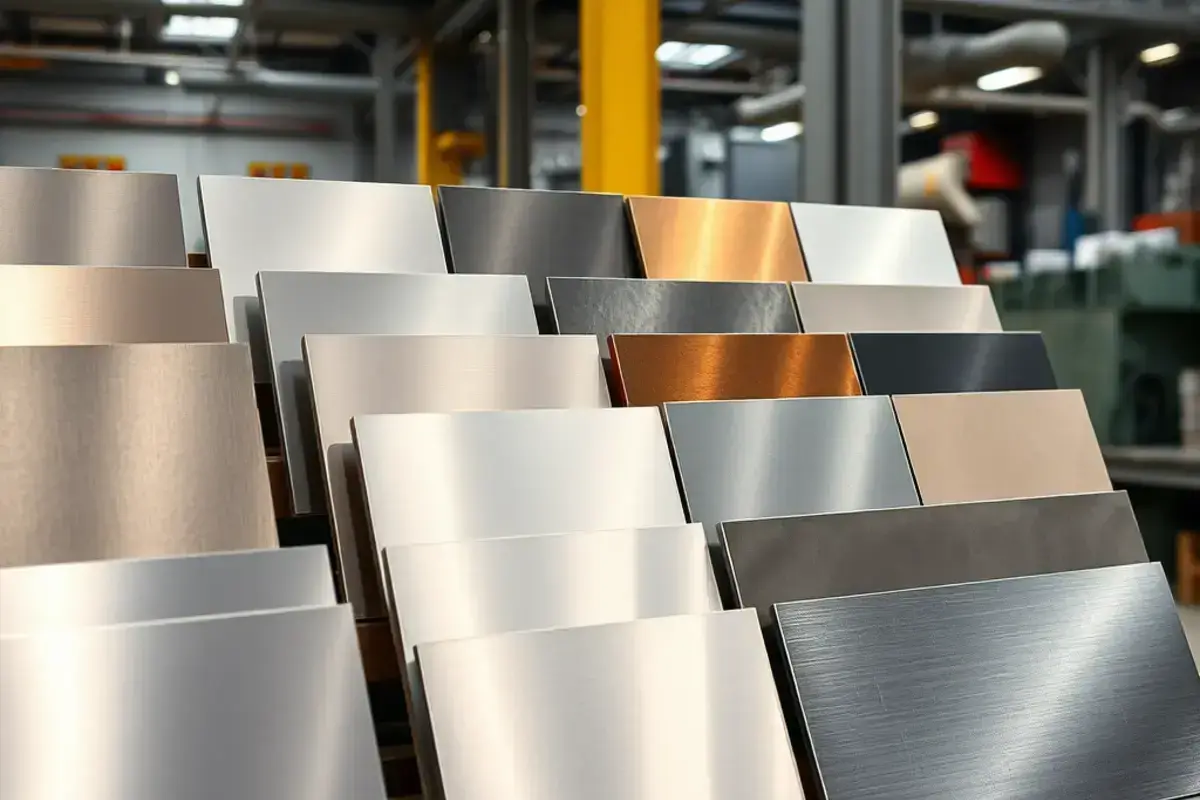
Visual inspection checks for coverage, adhesion, finish quality and defects. All parts are examined under proper lighting conditions to identify any issues that might not be apparent in shop lighting.
Thickness testing using X-ray fluorescence (XRF) or magnetic gauge methods verifies that the coating meets specifications. For quality-critical applications, we can provide salt spray testing (ASTM B117) results demonstrating actual corrosion resistance performance.
Our Quality Commitment
Documentation
We maintain detailed records of process parameters and testing results for quality-critical applications. Certifications available upon request.
Testing
Thickness verification, adhesion testing and salt spray testing available. We stand behind the quality of our work.
Consistency
Every batch receives the same attention to detail. Your second order will match your first — guaranteed.
Ready To Start Your Project?
Contact us to discuss your metal finishing needs. We'll help you select the right process for your application.